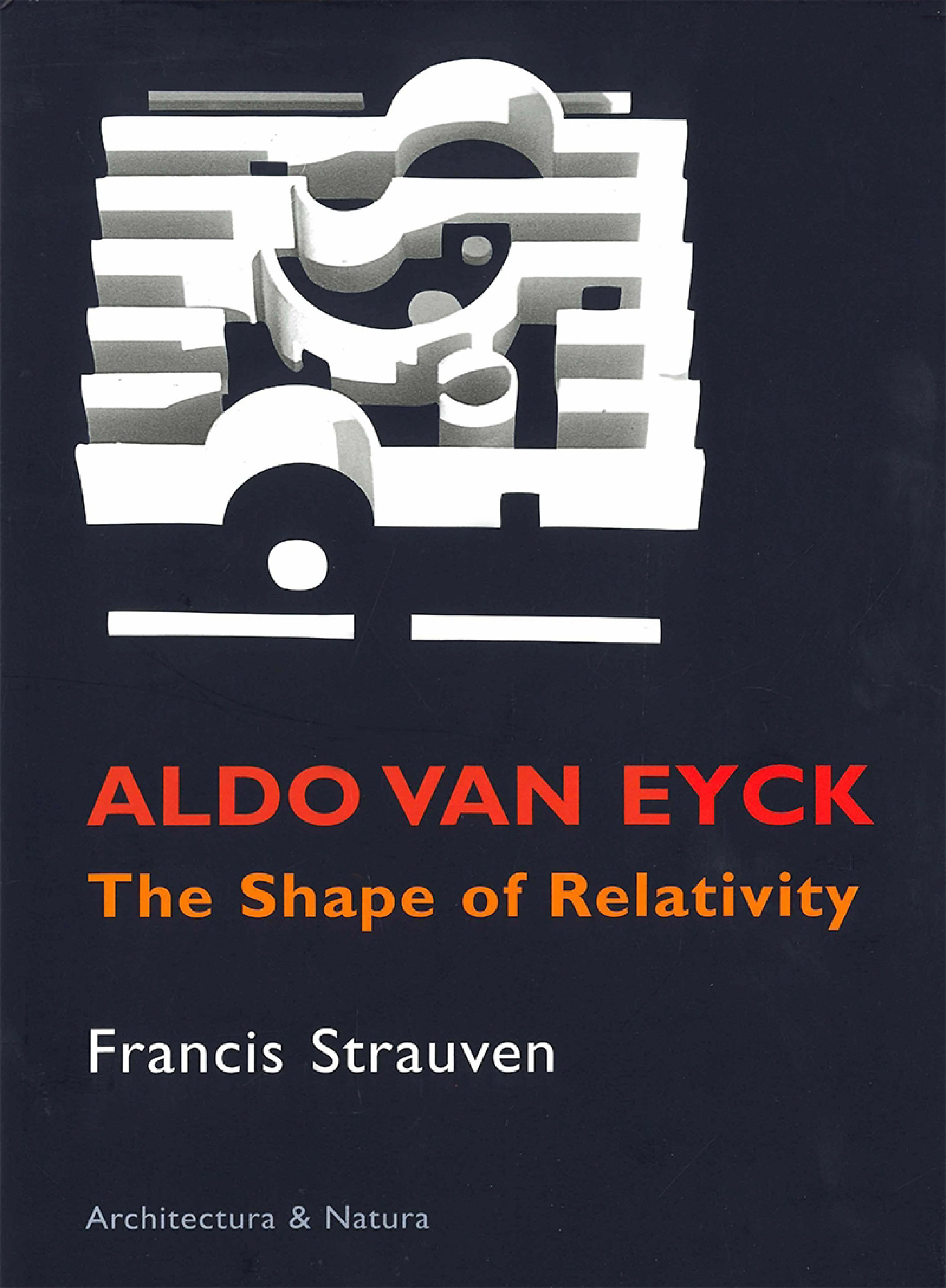
Aldo van Eyck. The Shape of Relativity ist die erste Monografie über einen Architekten, dessen poetischer Zugang seit dem Zweiten Weltkrieg einen weitreichenden Einfluss auf das architektonische Denken ausgeübt hat. Es ist die Geschichte einer ereignisreichen Karriere und eine intensive Auseinandersetzung mit einem Werk. Das Buch beschränkt sich dabei nicht nur auf die Architektur, sondern befasst sich in erster Linie mit den Ideen des Architekten. Es verfolgt die Wurzeln seines Denkens bis in seine frühe Kindheit zurück und beleuchtet seine frühe Leidenschaft für die Poesie, die wiederum mit dem klassischen Denken seines Vaters, des Dichters P.N. van Eyck, zusammenhängt. Es erzählt von seiner Entdeckung der Avantgarde des 20. Jahrhunderts und der archaischen Kulturen während seiner Zeit in Zürich und Paris. Es beschreibt seine Rolle in der Cobra-Bewegung und in „de 8 en Opbouw”, im CIAM und im dissidenten Team 10 sowie in der Architekturausbildung in Amsterdam und Delft.
Das Buch widmet dem Konzept der Relativität, das van Eyck als Grundlage der Kultur des 20. Jahrhunderts betrachtet, große Aufmerksamkeit. Es enthält eine detaillierte Untersuchung seiner Projekte und Gebäude, von den Kinderspielplätzen in Amsterdam und dem städtischen Waisenhaus über den introvertierten Sonsbeek-Pavillon bis hin zum verspielten Obersten Rechnungshof in Den Haag. Die englische Ausgabe dieser unverzichtbaren Studie über den bedeutendsten Nachkriegsarchitekten der Niederlande wurde 1998 zum 80. Geburtstag von Aldo van Eyck veröffentlicht. Das Buch enthält mehr als 600 Abbildungen, davon 100 in Farbe, eine Bibliografie der Schriften von Aldo van Eyck, eine ausgewählte Bibliografie der Literatur über Aldo van Eyck und eine Liste der Entwürfe und fertiggestellten Werke.
Aldo van Eyck. The Shape of Relativity is the first monograph on an architect whose poetic vision has exerted a far-reaching influence on architectural thinking since the Second World War. It is the story of an eventful career and an intensive study of an oeuvre. Far from limiting itself to architecture, this book deals primarily with the architect’s ideas. It traces the roots of his thinking to early childhood, throwing light on his early passion for poetry, in turn related to the classical thinking of his father the poet P.N.van Eyck. It recounts his discovery of the twentieth-century avant-garde and of archaic cultures while in Zurich and Paris. It develops his role in Cobra movement and in ‚de 8 en Opbouw‘, in international CIAM, and the dissident Team 10, and further in architectural education in Amsterdam and Delft.
The book pays considerable attention to the concept of relativity, which van Eyck regards as the foundation of the culture of the twentieth century. It includes a detailed examination of his projects and buildings, ranging from the children’s playgrounds of Amsterdam and the Municipal Orphanage, from the introverted Sonsbeek Pavilion to the exuberant Auditor’s Office in The Hague. The English edition of this indispensable study of the most eminent postwar architect of the Netherlands was published on the 80th birthday of Aldo van Eyck in 1998. The book contains more than 600 illustrations, of which 100 are in colour, a bibliography of writings by Aldo van Eyck, a selected bibliography of literature about Aldo van Eyck and a list of designs and completed works.